Matthew 7:21-23
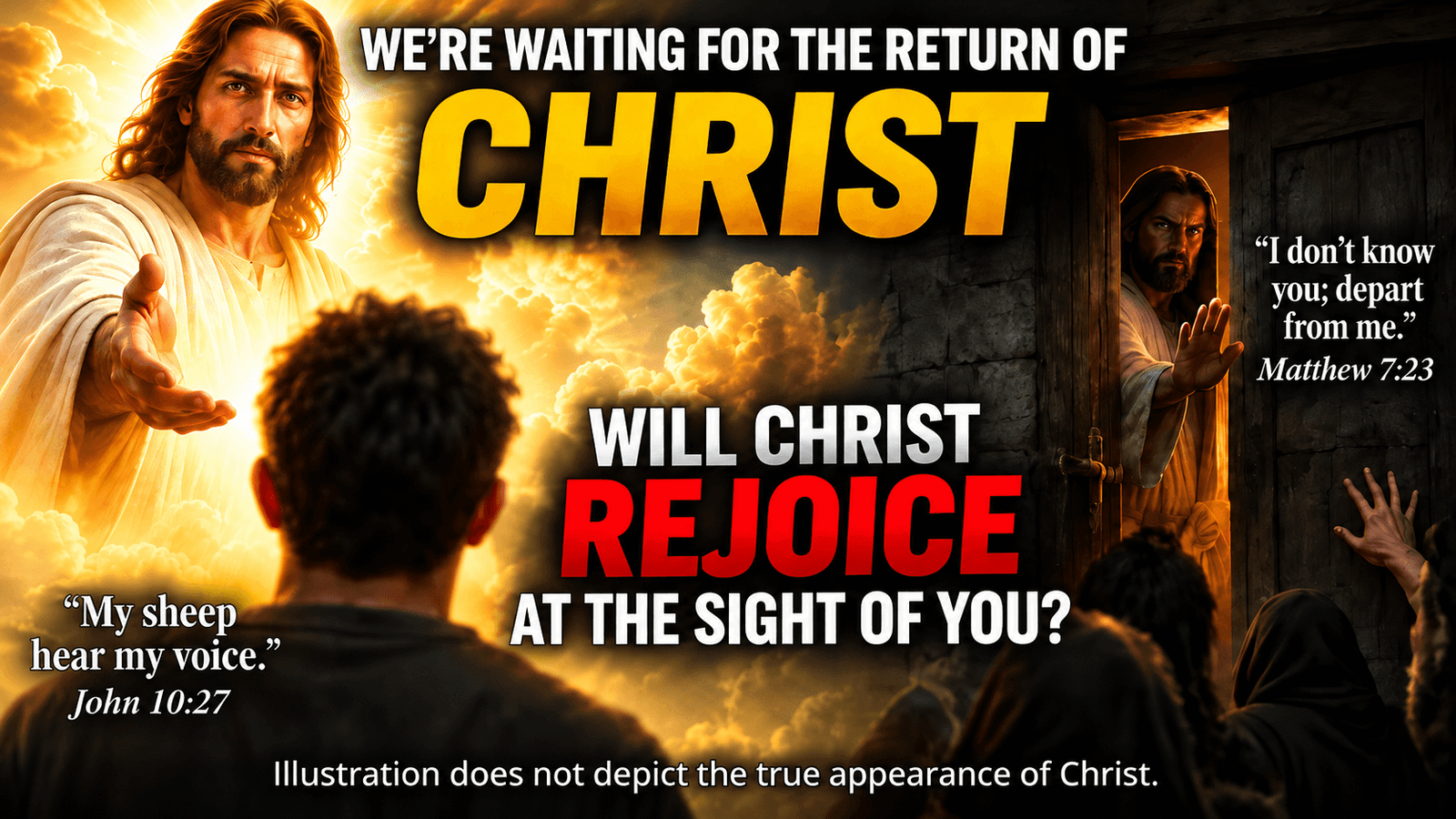
“Not everyone who says to Me: ‘Lord, Lord!’, will enter the kingdom of heaven, but the one who does the will of My Father who is in heaven. Many will say to Me on that day: ‘Lord, Lord, did we not prophesy in Your name, and did we not cast out demons in Your name, and did we not do many works of power in Your name?’ Then I will say to them: ‘I never knew you. Depart from Me, you who practice lawlessness!'”.
I told you that many will want to enter, but few will enter.
Warm greetings.
Listen, this is not something I made up. People do not understand a basic issue. On the one hand, they stress that it is enough to believe, and a person will be saved. Christ, however, says that this is not what it is about. Merely declaring faith in Him is not enough.
People explain this in different ways. Faith in some Christ does not yet mean faith in the true Christ. Why? As early as the 1st century, apostates appeared who changed the teachings of the apostles, adding various details to them. Back then they still used the true name, but they preached, for example, that Christ did not come in the flesh, but in spirit. According to this teaching, the one who died on the cross was a different human being, and Christ as a spirit merely dwelt in that person and left before death. Various such things were said. John wrote that preaching this kind of teaching is preaching the antichrist, that is, another Christ.
People who believe in such a Christ therefore do not believe in the true Christ. When He comes, He may say to them: “I do not know you”.
It is hard to explain to people that the problem may be that they belong to a religion that teaches about a false Christ. Even more crucial seems to be the situation in which this Christ has a different name.
Name and identity
Before Christ came as the Messiah, the Old Testament described many deities. Different religions could have different supreme gods. Someone will say: “After all, there is only one supreme God. There cannot be two supreme ones”. Some could also call their gods “God the Father”, although the Jews did not use such a term.
So how did the God of the Judeans differ from a pagan god who was also called supreme? The answer is simple: He differed by name. Of course, they also differed in principles and histories, but we do not know the histories of those deities. We do know, however, what relationship God had with the nation He chose.
The Bible describes Melchizedek as a priest of God Most High even before Israel came into being. The worship of God Most High was therefore widely known. In the time of the Israelites, other religions also worshiped their supreme gods, but they called them differently.
A similar problem concerns Christ today. What does it matter that someone believes in Christ if they address Him by another name? According to this argument, it may be another Christ.
Perhaps the pagans did not understand that there are not two supreme gods. They may have thought it did not matter whether they called a god Zeus, Jupiter, or something else. The Greeks and Romans had their own names for deities and considered that they referred to the same gods. God, however, did not recognize this. The fact that people adopted such a custom did not mean that they could actually call God whatever they wanted. Behind each of these names there was a different spiritual being. Those who understood this converted.
The same problem is said to apply today to professing Christ. On the one hand, we hear a simple condition: “believe, and you will be saved”. On the other hand, in the passage quoted, people not only believed, but also performed miracles. They claimed that they prophesied and cast out demons, and yet Christ said: “I do not know you”. He also called them practitioners of lawlessness.
They did not have to commit exceptionally evil acts. It was enough that they worshiped the wrong Christ. That is why they were surprised. If they had been convinced of their wickedness, they would have expected Christ to reject them. Meanwhile, they were sure they were saved, and they heard: “I do not know you. Depart from Me”.
Will Christ recognize you when He returns?
So I have a question for you. When Christ returns — and we are all waiting for His return — will He be glad to see you? I am asking about you specifically. Do not think about others, only about yourself. Will He recognize you? Will He say: “I know you. I could not wait for us to meet. I value what you do. I like your conduct. I have watched your spiritual growth”?
Can you really say that you are doing something for Christ that He values? Or do you think Christ should be glad that you believe in Him?
Such people do not want to believe in the Christ who came and whom the Bible presents. They prefer to believe in the Christ they imagine for themselves. The Judeans, the Pharisees, and others acted similarly: they did not accept the Christ who came, because they imagined Him differently. Millions of modern Christians make the same mistake. They do not want Christ as we proclaim Him, but the one who — in their opinion — He should be.
Many people say they love Christ. Yet when asked whether they follow His teachings, they often answer that they do, though they do not always know which teachings are meant. However, one can look at their lives and see that this is not so.
I once spoke with a woman who claimed that she loved Christ and that He was everything to her. I asked why she did not follow His teachings. She replied: “Which ones?”. Christ did not recognize divorce, and she had separated from her husband. There are many similar situations.
Plenty of people consider themselves zealous Christians and claim that they have a great relationship with Christ, while at the same time they do not follow His teachings. This also applies to lying and other matters. A common problem is judging others. People judge, gossip, criticize, and slander on a massive scale. They do not check anything, but they know in advance what another person is like.
Not only do they not do what Christ commands, they also do what He forbids. And yet they are convinced that they will be saved. Where do they get this certainty? Christ clearly warned that many would try to enter, but few would be able to.
The verses quoted at the beginning from the Gospel of Matthew 7:21–23, where Christ says: “I never knew you”, despite the miracles those people performed. A similar passage is found near the end of the Gospel of Luke, in chapter 13. As for me, it refers to Messianic Jews.
The warning from the Gospel of Luke
Let us open the Gospel of Luke 13:25-27
“When the master of the house rises and shuts the door, you, standing outside, will begin to knock, saying: ‘Lord, open to us!’. He will answer you: I do not know where you are from?’ Then you will say: ‘But we ate and drank in Your presence, and You taught in our streets’. He will answer you: ‘I do not know where you are from. Depart from me, all you workers of unrighteousness!'”.
These people were convinced that they were serving Christ. The passage speaks of weeping and gnashing of teeth and of their being cast out. This is not about pagans, but about Christians who declare faith in Christ. Some of them may even suffer persecution; someone may have been beaten or killed.
I believe, however, that Messianic Jews avoid persecution. They do this in two ways. First, they deny the name Yeshu. They know that Jews know this name, so — in order not to be associated with Christians, who are not liked in Israel — they say: “We do not believe in Yeshu, we believe in Yeshua”. In this way, in my assessment, they deny Christ.
Second, in order to avoid persecution, they are very zealous in military service and exceptionally patriotic. They become model citizens of the beast. We spoke about this a week, two, or three weeks ago: the beast from the Book of Revelation is, according to my interpretation, Israel. Its power and might come from Satan, according to the thirteenth chapter of Revelation.
So the question is once again: are you sure that Christ will be glad to see you and will recognize you? It is worth thinking about this. If you think so, ask yourself: what are you doing for Christ that would make Him glad? Not for yourself and not for your family, but for Christ.
Conditions for salvation according to the passages discussed
Since many people may be deceived, what conditions must be met in order to attain salvation and not be among the disappointed? I will read a few passages.
Confession of the name
Let us begin with Romans 10:9
“Because if you declare with your mouth that Yeshu is Lord and believe in your heart that God raised Him from the dead, you will be saved”.
If faith in any Christ, under any name, were enough for salvation, Christ should recognize those who used the wrong name. Meanwhile, in your Bible translations — Catholic and Protestant — in this place, instead of the name “Yeshu”, there is “Jesus”. In other languages this name is pronounced differently: in Polish “Yezus”, in Spanish “Hesús”, and in French differently as well.
If we pray out loud and are not reading the name from a piece of paper, we are addressing Christ by the name we use. You need to realize that this means addressing another Christ, just as the pagans addressed another supreme god by another name.
The name of the God of Israel could not simply be replaced with another, similar one. Jehovah’s Witnesses — as I have been saying for a long time — have also made a serious mistake that they do not want to admit. Not knowing how the tetragrammaton YHWH is correctly pronounced, they were supposed to have adopted the form “Jehowach” from Masonic and church tradition. I claim that this form is offensive to God. In my opinion, “Jehowach” means “one who is a destroyer” or “troublemaker”, not “Creator”. God’s name was supposed to mean “The One who causes to become”. That is exactly how Jehovah’s Witnesses themselves translate it, deriving it from the verb “Havah” meaning “to become”. However, they do not talk about the noun “Hovah”, which means “troublemaker” or “destroyer”.
This is an example of the fact that having good intentions is not enough. You have to be careful what name you use. The Bible shows that God changed the names of Abraham, Sarah, and other people, sometimes changing one sound in them. That was already a different name, not simply a similar form.
In my opinion, this is an important biblical teaching: changing one sound means a different name. We also know — as I said in other publications — that the angel Gabriel made sure the child received a specific name. First he told Mariam about it, and then Joseph. He also explained why the child was to be called that: he was to be the Savior.
Some people wrongly explain that the name “Yeshu” means “YHWH saves”. No. It means “Savior”. The angel said that this child, who would become a man, would save people — he would be the Savior. It is another matter that Christ also appeared under the name YHWH, so it comes to the same thing. You can check the publications from a few weeks ago, where I described the topic in detail.
The first condition for properly worshiping the true Christ, then, is to know His name. As we read: if you confess with your mouth that Yeshu is Lord, you will be saved.
Immersion in the name of Yeshu
Acts 2:38. Peter answers the people who ask what they should do, because they understood that they had killed the Messiah. He says:
“Correct yourselves and let each of you be immersed in the name of Yeshu the Anointed for the forgiveness of your shortcomings (sins), and you will receive the gift of the holy Breath (Spiryt)”.
The second condition, besides calling on the name of the Lord, is therefore to accept immersion in the name of Yeshu for the forgiveness of sins. The name used in prayer is like a shipping address: it determines to whom we direct the prayer. People pray to various gods, Christs, and spirits. The first condition is to pray to Christ named Yeshu, and the second — to accept immersion in His name.
Since we are in Acts, let us also open chapter 4, verse 12.
“And there is salvation in no one else, nor has any other name been given to people under heaven by which we must be saved”.
If someone believes that Christ is equal to the Father, they believe in an unbiblical Christ. Even using the proper name would not change that, it would still be another Christ. On the other hand, in many countries, for example in India, people who believe in Christ use the name Yeshu. Protestants and Catholics also say it that way.
Even if you had correct teachings about Christ, but prayed to Him using the names “Jesus”, “Yezus”, “Hesus”, or others, you are not praying to our Lord Yeshu, who has one name. This name was given to all people under heaven, not only to a specific group, Greeks, or Judeans.
Let us also open Acts, chapter 8, verse 12:
“But when they believed Philip, who taught about God’s rule and about the name of Yeshu the Anointed, both men and women accepted immersion”.
Philip taught about the kingdom of God and about the name of Christ. Who today — among Catholics, Protestants, and others — teaches about the name of Christ? Believers of the same religion cross a border and start speaking differently. An English person says “Jesus”, a French person says it differently. What kind of teaching is this, which no one teaches today? Maybe I will expand on the topic another time.
Immersion in the name of Yeshu is the second condition of salvation.
Enduring to the end
The third step is found in the Gospel of Mark, chapter 13, verse 13:
“You will be hated by everyone because of my name; but whoever endures to the end will be saved”.
Many people are not open to what I preach precisely because I preach the name Yeshu. They like many of the things I say, but they cannot accept this name. Meanwhile, their fellow believers in India use it and do not consider it anything extraordinary.
Some supposedly educated monks, who know ancient Hebrew, claim that the name Yeshu is offensive. In that case, they should convert their brothers in India, who pray to Yeshu. There too there are educated people — archbishops and bishops — who believe that Christ is named Yeshu and that this name is not offensive. That is what happens when people do not know what they believe in, or do not know their own religion.
However, the aversion to this name is enormous. I believe that the name Yeshua, used by Messianic Jews, will be promoted so that those who realize that “Jesus” or “Yezus” is not the true name will fall into a second trap and begin to believe that “Yeshua” is the correct one.
The word “Yeshua” is feminine and means “salvation”, so one could say: “female savior”. In Polish, “salvation” is neuter, and in Hebrew — feminine. The spelling is slightly different; the final “he” indicates the form read as “Yeshua”. “Yeshu” does not have this “he”.
In Syria, Aramaic was used, and therefore also the alphabet used by Jews. Few people know that Jews adopted the Babylonian alphabet during the captivity. Those who regard the Hebrew alphabet as holy would therefore have to worship the Babylonian alphabet, that is, the Syrian, Aramaic one. After returning from Babylon, the Israelites were simply supposed to have brought this alphabet, just as Poles use the Latin alphabet.
So one must endure persecution. Anyone who acknowledges Christ by the name Yeshu may face mockery, insults, or persecution. Today these are minor, but in the future they are supposed to be greater. True persecution is still ahead of us.
So we have the following conditions: call on the name of the Lord, accept immersion in His name, and endure to the end.
Eating the body and blood
The fourth condition is found in the Gospel of John, chapter 6, verses 53–54:
“And Yeshu said to them: I assure you that: Unless you eat the body of the Son of Man and drink His blood, you will not have life in yourselves. Whoever eats my body and drinks my blood has within themselves the life of the future eon, because I will restore them to life on the last day”.
This is, of course, about symbolically eating the body and blood of Christ, that is, bread and wine. For us, this takes place once a year; next year it will be in April. If someone becomes spiritually mature by then and wants to join, I invite them. We fulfill this condition once a year. Immersion can be accepted at any time, and praying is even easier — even today.
These are the basic conditions.
Deceivers and false prophets
Let us move on to the next verses, concerning deceivers.
Even if someone is fortunate enough to find the true faith — a community that, by the power of the Holy Spirit, can be called the body of Christ or the temple of God — they must still be careful. There are not two or three temples, nor two or three bodies. If a schism occurs within this temple, the schismatics are apostates. Such a schism can lead people away from the true Christ.
Christ himself warned about this. Gospel of Matthew, chapter 24:
“Yeshu answered them: Take care that no one deceives you. Many will come in my name, saying: ‘I am the Anointed One’ and they will deceive many”.
We talked about the fact that the apostle John later wrote about many antichrists, that is, other Christs. Catholicism recognizes Christ as equal to God the Father, and this is a false Christ, because Christ was never equal to the Father. The Catholic Christ is therefore an antichrist and an example of deception. If anyone wants to review the full material on the trinity, I invite you to my channel. I recently published materials on this topic.
In the same chapter we read:
“Because false Anointed Ones and those falsely speaking in the name of God will arise, and they will perform great signs and extraordinary phenomena, to deceive, if possible, even the chosen ones.”
This is what happens in many religions. Not only do Catholics boast of Marian miracles; Protestants also talk about miracles. The key point is that Christ warned against frauds and deceivers. Why does a false anointed one appear? In order to replace the true one. In my opinion, the Christ named Jesus is a false Christ.
False prophets, in turn, are those who falsely speak in the name of God. The word “prophet” makes us think of someone who predicts the future, but literally it means a person speaking in the name of God. So every preacher or clergyman who claims to teach the word of God belongs to this group. If they teach the word of God wrongly, they are a false prophet.
Christ said that there would be many such people. This means a division among people who declare faith in Him. It will look as if they worship Christ, but in reality they will worship false Christs, that is, antichrists. Today we see this in Christianity: many preachers and clergymen teach their own views, not representing God or Christ, and yet they claim the right to decide what is true.
Sometimes they can be recognized by the fact that they establish rules that are not in the Bible. Christ warned against such people. The Apostle Paul also said that Christ would not come before the apostasy took place. First the teaching about a god in two persons was introduced, and later about three — only in the 4th century. The apostles did not know the doctrine of the Trinity; even Christ never thought of making Himself equal to the Father. The Bible says this plainly.
Even if you find yourselves in a true community of Christ’s brothers, you must be careful, because deceivers may appear among them. That is why Christ said: “So do not sleep and keep watch, because you do not know at what moment your Lord will come”.
The parable of the virgins
Why should we be watchful? Let us turn to the Gospel of Matthew, chapter 25, verses 11–13:
“Afterward the other virgins also returned and pleaded: Lord! Lord! Open to us. But He answered them: Amen, I assure you, I do not know you”.
In my opinion, this refers to Christians, that is, believers in Christ — the wise and the foolish. They differ in whether they are prepared for the Lord’s coming. The foolish virgins wanted to fix the situation, but it was already too late. The answer is firm: there will be no negotiations or plea for mercy. “I do not know you”. The conclusion is: “Therefore keep watch, because you do not know the day or the hour”.
Believing is not enough. One must act properly and be prepared. One must not neglect what is necessary, like the virgins who did not make sure they had enough oil. One can disregard something, assume that “it will surely be enough”, and later discover that a lack of prudence led to the loss of salvation.
This is a serious matter. There will be no repeat and no second chance. If we waste this opportunity, it will be the end. That is why Christ says: “Therefore keep watch, because you do not know the day or the hour”.
He also says to endure to the end. Let us return to the Gospel of Matthew, chapter 24, verses 9 to 13:
“Then they will hand you over to affliction and will kill you, and you will be hated by all nations because of My name”.
Even in Poland, although we are a small group, I too experience hostility because of this name. I proclaim the name Yeshu, even though Catholics surround me, and Catholics in India believe in Yeshu and pray to Him.
“Then many will stumble in faith; they will betray one another and hate one another. Many false prophets will arise and will lead many astray; and because lawlessness will increase, the love of many will grow cold. But whoever endures to the end will be saved”.
Despite persecution and the cooling of love, we are to endure to the end.
Who are the saints?
Who will be saved? We sometimes say of someone that they are a saint. Many people reply: “I am not a saint”. However, if you are not a saint, you will not be saved — that is my argument. People think that a saint is someone who does not sin. There is no person who does not sin; everyone sins. It is not that we are ideal, wonderful, and magnificent.
Who are the saints? We find the answer in the Revelation of John, in chapter 14, verse 12:
“Here is the endurance of the saints, those who keep the commandments of God and the faith of Yeshu”.
The saints keep the commandments of God. So one cannot establish one’s own rules, explaining that we live in different times and faith has become somewhat archaic.
This is how, for example, supporters of immorality explain it, because they cannot give it up. Drunkards who cannot live without alcohol speak similarly. Christ says that drunkards will not inherit the kingdom of God. Homosexuals explain themselves in the same way. It goes so far that some churches — especially Protestant ones, but also, though quietly, Catholic ones — see nothing wrong with homosexuality. Some congregations perform such weddings, and the pastors are especially lesbians.
These are examples of people changing the teachings and not following the Bible. How can they later say: “Lord, we performed miracles in Your name”, and hear: “I do not know you”? They do not follow the teachings of Christ. It is said that the saints keep the commandments of God.
The beast, Babylon, and spiritual armor
So let us put it this way: we must endure to the end and not worship the beast.
In Revelation, chapter 14, verses 9–10, we read about the third angel, who says in a loud voice:
“If anyone worships the Beast, and its image, and takes its mark on their forehead or hand, they too will drink the wine of God’s wrath, prepared unmixed, in the cup of His anger; and they will be tormented with fire and sulfur in the presence of the holy messengers (angels) and in the presence of the Lamb”.
We must not worship the beast. Many Christians worship it. We must warn others not to do so either.
Revelation 18:4 speaks of coming out of Babylon the Great:
“And I heard another voice from heaven saying: ‘My people, come out of her, so that you do not share in her offenses (sins) and suffer none of her plagues'”.
I have thought a lot about what it means to come out of Babylon the Great or from the Great Harlot. I believe it is about Judaism. The world’s largest corporations, including pharmaceutical companies — which subject us to medical experiments — are supposed to belong to the Great Harlot, who planned to reduce the population on Earth.
One might think that belonging to her means belonging to her system, that is, for example, to pharmaceuticals and corporations. The Bible says, however, that before the fall of the Great Harlot, the image of the beast will arise, which will decide who can buy and who cannot. This may suggest that the economy, perhaps the banking system, will first be taken over by the beast.
What else remains? Judaism is a religious system that the Bible calls the “Mother of harlots” and “Babylon the Great”. It operates from hiding, pulling the world’s strings. It has its heirs — including Christianity and Islam — which, I argue, derive from Judaism. It is all one big family. Leaving these religions therefore means coming out of Babylon the Great. If you remain part of them, you will bear the punishment spoken of in the text. You have to come out of them.
Ephesians 6:10–18 says that we do not fight with a sword, but with spiritual armor. The armor contains protective elements, such as faith and a helmet, but it also has an offensive element, namely a sword. In preaching the Gospel, we do not run away: on the one hand we defend ourselves, and on the other we attack with the word of God. We are warriors, and it is worth remembering that. We must take care of the armor. Our additional strengthening is prayer.
We must also love other people, not take revenge, and — if they need it — feed our enemies and dress their wounds. These are the teachings of Christ. The world is far from them, even if people call themselves Christians.
This is often Christianity in name only, having nothing to do with Christ. If you do not have love in you, you have nothing to do with Christ. If you hold a grudge against someone and say: “I will never forgive them for this”, you also have nothing to do with Him.
When all these bad things we have spoken about in previous weeks begin, there will be no reason to break down, but to lift up our heads, because our deliverance is drawing near. We are not afraid of those who kill the body, because Christ promised us resurrection.
Every day we must be ready for the coming of the Lord, and also for death — with the conviction that we will meet the Lord, because we were ready. This is what the teachings about keeping watch come down to.
Thanks for listening until the end. I would be extremely grateful for likes, shares and comments, because it helps grow the channel, which gives a chance to reach even more people.
If you receive the gift of faith in the name of our Lord Yeshu, take the next step and contact me to be immersed in the name of Yeshu. You can find contact details on our website or simply write on Messenger.
The full written version of the article is now available at yeshu.blog . There you will also find my videos and music — all created in the name of our Lord Yeshu.
Glory to Yeshu!!!