The topic of today’s reflection came about by chance. In the morning I still didn’t know what I wanted to talk about. I did, however, want to start the day as usual, that is—if I have time—by greeting my brothers on Skype. To greet them I intended to quote a Bible verse, so I turned to my website jeszu.com. There, in the section on the right, “Word for today” presents a different verse every day. The order of these verses is automatic, I can choose a verse myself, but as a rule I don’t interfere with what is displayed. It was a surprise for me, too, what appeared.
This time it was Ephesians 6:12-13 in the Protestant Bible version, that is, in archaic, old language. The word “𝐚𝐫𝐜𝐡𝐞” is key to today’s topic, because the term “𝐚𝐫𝐜𝐡𝐨𝐧𝐬” derives from it. Because the text was in archaic language, I sat down and started to translate it word by word. In this way I discovered many interesting things, including the deeper meaning of the word “𝐚𝐫𝐜𝐡𝐞”, which is most often translated simply as “𝐚𝐮𝐭𝐡𝐨𝐫𝐢𝐭𝐲”.
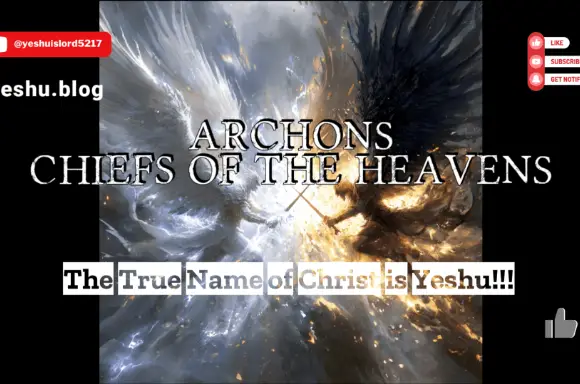
This translation became the starting point to develop today’s topic. Here, we are talking about the archons—the Polonized version of the Greek word. It can be found in Wiktionary, although it is not always described in detail. Wikipedia does not comment on the archons in a spiritual sense, but notes the use of this word in antiquity. Archon (from the Greek “𝐚𝐫𝐜𝐡𝐨𝐧”) is translated as “𝐫𝐮𝐥𝐞𝐫”, but it comes from “𝐚𝐫𝐜𝐡𝐞”, which means “𝐭𝐨 𝐛𝐞 𝐚𝐭 𝐭𝐡𝐞 𝐡𝐞𝐚𝐝”. This is key. “𝐑𝐮𝐥𝐞𝐫” is a later meaning that this word took on. In reality, it refers to someone who stands at the head, so the most literal translation would be “𝐜𝐡𝐢𝐞𝐟”.
In antiquity, for instance in Athens, it was a popular term. It survived even until the 3rd century AD in Byzantium, where archons referred to judges or overseers of priests—simply people with authority. In Athens, they were divided into nine offices: six were judges, others dealt with foreign policy, religious rites, or legal norms. There was also a chief archon, that is, the head of the other archons. Today, in a modernized version, in the government these would be ministers—people responsible for specific fields. There weren’t many of them, which shows that archons stood at the head and wielded real authority.
We, however, are interested in biblical archons, because this word appears in the Holy Scriptures. In Ephesians 6:12-13, in the Catholic Bible translation, it goes like this: “𝐅𝐨𝐫 𝐨𝐮𝐫 𝐬𝐭𝐫𝐮𝐠𝐠𝐥𝐞 𝐢𝐬 𝐧𝐨𝐭 𝐚𝐠𝐚𝐢𝐧𝐬𝐭 𝐛𝐥𝐨𝐨𝐝 𝐚𝐧𝐝 𝐟𝐥𝐞𝐬𝐡, 𝐛𝐮𝐭 𝐚𝐠𝐚𝐢𝐧𝐬𝐭 𝐏𝐫𝐢𝐧𝐜𝐢𝐩𝐚𝐥𝐢𝐭𝐢𝐞𝐬, 𝐚𝐠𝐚𝐢𝐧𝐬𝐭 𝐏𝐨𝐰𝐞𝐫𝐬, 𝐚𝐠𝐚𝐢𝐧𝐬𝐭 𝐭𝐡𝐞 𝐫𝐮𝐥𝐞𝐫𝐬 𝐨𝐟 𝐭𝐡𝐢𝐬 𝐰𝐨𝐫𝐥𝐝 𝐨𝐟 𝐝𝐚𝐫𝐤𝐧𝐞𝐬𝐬, 𝐚𝐠𝐚𝐢𝐧𝐬𝐭 𝐭𝐡𝐞 𝐬𝐩𝐢𝐫𝐢𝐭𝐮𝐚𝐥 𝐞𝐥𝐞𝐦𝐞𝐧𝐭𝐬 𝐨𝐟 𝐞𝐯𝐢𝐥 𝐢𝐧 𝐭𝐡𝐞 𝐡𝐞𝐚𝐯𝐞𝐧𝐥𝐲 𝐫𝐞𝐚𝐥𝐦𝐬.” Here the archons were translated as “𝐩𝐫𝐢𝐧𝐜𝐢𝐩𝐚𝐥𝐢𝐭𝐢𝐞𝐬”, that is, those on top. Neither the Protestant Bible version nor this one is as accurate as they could be.
That’s why I translated it myself, and for me it looks as follows: “𝐅𝐨𝐫 𝐢𝐭 𝐢𝐬 𝐧𝐨𝐭 𝐟𝐨𝐫 𝐮𝐬 𝐭𝐨 𝐰𝐫𝐞𝐬𝐭𝐥𝐞 𝐚𝐠𝐚𝐢𝐧𝐬𝐭 𝐛𝐥𝐨𝐨𝐝 𝐚𝐧𝐝 𝐟𝐥𝐞𝐬𝐡.” Right at the outset, we see the difference. There it is “𝐰𝐞 𝐬𝐭𝐫𝐮𝐠𝐠𝐥𝐞 𝐧𝐨𝐭,” and the literal translation is “𝐢𝐭 𝐢𝐬 𝐧𝐨𝐭 𝐟𝐨𝐫 𝐮𝐬 𝐭𝐨 𝐰𝐫𝐞𝐬𝐭𝐥𝐞 𝐚𝐠𝐚𝐢𝐧𝐬𝐭 𝐛𝐥𝐨𝐨𝐝 𝐚𝐧𝐝 𝐟𝐥𝐞𝐬𝐡.” This opens a deeper understanding, which we often overlook in daily reading.
So it’s not about what we do, but about the fact that “𝐢𝐭 𝐢𝐬 𝐧𝐨𝐭 𝐟𝐨𝐫 𝐮𝐬”—you could add in parentheses: “𝐢𝐭 𝐢𝐬 𝐧𝐨𝐭 𝐝𝐞𝐬𝐭𝐢𝐧𝐞𝐝 𝐟𝐨𝐫 𝐮𝐬”—to wrestle against blood and flesh. In other words, we are not destined for corporeal struggle, that is not for us. For the servants of Christ, such struggle is not intended—that is the message hidden here, if you translate it precisely: “𝐟𝐨𝐫 𝐢𝐭 𝐢𝐬 𝐧𝐨𝐭 𝐟𝐨𝐫 𝐮𝐬 (𝐲𝐨𝐮 𝐜𝐚𝐧 𝐚𝐝𝐝: 𝐝𝐞𝐬𝐭𝐢𝐧𝐞𝐝 𝐨𝐫 𝐠𝐢𝐯𝐞𝐧) 𝐭𝐨 𝐰𝐫𝐞𝐬𝐭𝐥𝐞 𝐚𝐠𝐚𝐢𝐧𝐬𝐭 𝐛𝐥𝐨𝐨𝐝 𝐚𝐧𝐝 𝐟𝐥𝐞𝐬𝐡, 𝐛𝐮𝐭 𝐚𝐠𝐚𝐢𝐧𝐬𝐭 𝐭𝐡𝐞 𝐟𝐢𝐫𝐬𝐭 𝐨𝐧𝐞𝐬.”
So “𝐚𝐫𝐜𝐡𝐨𝐧” translated as “𝐭𝐡𝐞 𝐟𝐢𝐫𝐬𝐭 𝐨𝐧𝐞𝐬”, that is, those who are at the head. In the explanation, which can be skipped when reading, I’ve added: pioneering leaders. Because what does “𝐚𝐫𝐜𝐡𝐨𝐧” mean according to the Bible dictionary? I even made a screenshot from the Strong’s dictionary, because it’s probably the best, though it also has doctrinal translations. Nevertheless, this is the best dictionary. The word is under number G746: “𝐚𝐫𝐜𝐡𝐞”, a feminine noun. And what does it mean? Beginning, origin; a person or thing that initiates something; the first in a sequence; the one leading; that by which something starts to exist; beginning, effective cause.
Look, in these basic meanings, when we read about archons in heaven, we learn that it refers to someone who is from the beginning, who starts something, through whom something happens. And instantly, this must make us think of Elohim. They too were earlier, before humans were created, and creation continued through them. We know that the first being brought to life is our Lord Yeshu – He is begotten, because only God called Him to life, no one helped Him, because there was no one before Him. But then it turns out that archons were created, that is, those who are also the first at the beginning and constitute great authority in heaven.
Archons are probably the same ones we find under the name translated by some as “𝐒𝐨𝐧𝐬 𝐨𝐟 𝐆𝐨𝐝”, more precisely “𝐒𝐨𝐧𝐬 𝐆𝐨𝐝𝐬”, that is “𝐄𝐥𝐨𝐡𝐢𝐦”, “𝐒𝐨𝐧𝐬 𝐨𝐟 𝐄𝐥𝐨𝐡𝐢𝐦”. According to the Book of Deuteronomy 32:8, they were given authority over the nations. The nations were divided according to the number of the Sons of Gods, from which it follows that they received this authority. We know that at first they exercised it well – for example, Job or Melchizedek knew God, and Melchizedek held a very high position. Even Paul claims he was higher than Abraham, because Abraham paid him a tithe. He was a priest of the Most High God, that is, the true one.
So at first these archons, these first ones who were the cause of everything, received authority over the nations and probably in most cases acted well. However, something later happened, because Paul writes in the Letter to the Ephesians that we fight against them. Look at what it must have come to. We wrestle – this word can be translated as to compete or to grapple – against the archons, that is, against the first ones who came into being (of course after Christ). For some reason, they are hostile toward us.
Why might they be hostile, why do we have to struggle against them? We can deduce: because we belong to Christ, the first of the first, that is, the archon of the first one who came into existence. From this the conclusion is that a conflict arose in heaven between our Lord Yeshu and at least some of the archons. We don’t know how many. We know not all, because Michael the Archangel is also an archon – Archangel, that is, the first of angels. Michael the Archangel holds great authority, is one of the archons and supports the chosen nation. The Book of Daniel says that he supported and helped – among other things, he enabled an angel who was blocked by another archon to reach Daniel by taking that one’s strength upon himself.
In the Book of Revelation we also learn that Michael the Archon, that is, the Archangel, has a certain task to fulfill. But more about that another time. “𝐀𝐫𝐜𝐡𝐚𝐧𝐠𝐞𝐥” comes from “𝐭𝐡𝐞 𝐟𝐢𝐫𝐬𝐭 𝐚𝐦𝐨𝐧𝐠 𝐚𝐧𝐠𝐞𝐥𝐬”. So we know for sure not all the archons opposed Christ, but some did. Probably among those archons there was a spiritual being whose real name we do not know – for she is not worthy to have her name remembered – and we know her under the name slanderer, adversary, that is, Satan-devil. This is a word that is not a proper name, but a general term for all adversaries and slanderers who use slander. They are devils and satans, you could say.
So some powerful struggle is taking place. Now let’s look at the archons from a different perspective. So: beginning, origin; a person or thing that initiates something; the first in a sequence; the one leading; that by which something starts to exist; beginning, effective cause. So when it comes to these powers that are struggling with us, these are those who were first, who led, who were also the effective cause of what happened later.
Then there is the fourth point: edge of something. For example, the corners of the sail were spoken of in a similar way — we say “𝐞𝐧𝐝𝐬”, for example, there is a Bible verse where Peter sees animals on a sheet coming down from heaven and it says that the ends of the sheet were facing downwards. The Polish translator says “𝐞𝐧𝐝𝐬”, and in Greek it was “𝐛𝐞𝐠𝐢𝐧𝐧𝐢𝐧𝐠𝐬 𝐨𝐟 𝐭𝐡𝐞 𝐬𝐡𝐞𝐞𝐭”. Because it’s a matter of convention: what we call the end may be the beginning for someone else. Just like in the discussion of whether a glass is half full or half empty. Similarly here — does it begin or end at this place. In Greek, it was the “𝐛𝐞𝐠𝐢𝐧𝐧𝐢𝐧𝐠” of the sheet or the sail, so the word can mean something that is the start or at the beginning.
Next is the fifth meaning: first place, principality, authority, judicial office. As I mentioned, judges, various political rulers were also called by this term. Some angels and demons were also called archons or arche — that’s already the sixth point, which comes from the Letter to the Ephesians, chapter 6, where certain powers in heaven, i.e., angels and demons, were named this way. That’s why it appeared in the definition.
Pay attention to the next word: G747, that is, “𝐚𝐫𝐜𝐡𝐞𝐠𝐨𝐬”. It’s the same word as “𝐚𝐫𝐜𝐡𝐞”, but in the masculine form. The word “𝐚𝐫𝐜𝐡𝐞𝐠𝐨𝐬” appears four times in reference to Christ — that Christ is also arche, that is, archegos, but in the masculine form. It’s a rather interesting point that in the masculine form, it was significant to give Christ the masculine gender, and that was mainly distinguished by the ending “𝐬”. Hence, “𝐚𝐫𝐜𝐡𝐞𝐠𝐨𝐬”. Maybe I’ll show you in which verses this appears, because I noted it. For example, Acts of the Apostles 3:15. We’ll return to Ephesians, because it’s very important, but for now let’s look at these places where Christ is called the beginning. They are often poorly translated, I’ve noticed. I made an effort to check those verses and translate them.
My translation:
Acts 3:15 — “𝐓𝐡𝐢𝐬 𝐨𝐧𝐞 𝐛𝐞𝐢𝐧𝐠 𝐭𝐡𝐞 𝐛𝐞𝐠𝐢𝐧𝐧𝐢𝐧𝐠 [𝐟𝐢𝐫𝐬𝐭, 𝐜𝐡𝐢𝐞𝐟, 𝐩𝐢𝐨𝐧𝐞𝐞𝐫, 𝐢𝐧𝐢𝐭𝐢𝐚𝐭𝐨𝐫] 𝐨𝐟 𝐥𝐢𝐟𝐞 𝐲𝐨𝐮 𝐤𝐢𝐥𝐥𝐞𝐝, 𝐰𝐡𝐨𝐦 𝐆𝐨𝐝 𝐫𝐚𝐢𝐬𝐞𝐝 𝐟𝐫𝐨𝐦 𝐭𝐡𝐞 𝐝𝐞𝐚𝐝, 𝐨𝐟 𝐰𝐡𝐨𝐦 [𝐰𝐡𝐚𝐭] 𝐰𝐞 𝐚𝐫𝐞 𝐰𝐢𝐭𝐧𝐞𝐬𝐬𝐞𝐬 [𝐭𝐞𝐬𝐭𝐢𝐟𝐲𝐢𝐧𝐠].”
Acts 5:31 — “𝐓𝐡𝐢𝐬 𝐨𝐧𝐞 𝐆𝐨𝐝, 𝐛𝐞𝐢𝐧𝐠 𝐭𝐡𝐞 𝐛𝐞𝐠𝐢𝐧𝐧𝐢𝐧𝐠 [𝐎𝐫𝐠𝐚𝐧𝐢𝐳𝐞𝐫, 𝐈𝐧𝐬𝐩𝐢𝐫𝐞𝐫, 𝐋𝐞𝐚𝐝𝐞𝐫] 𝐚𝐧𝐝 𝐒𝐚𝐯𝐢𝐨𝐫, 𝐞𝐱𝐚𝐥𝐭𝐞𝐝 𝐰𝐢𝐭𝐡 𝐇𝐢𝐬 𝐫𝐢𝐠𝐡𝐭 𝐡𝐚𝐧𝐝, 𝐭𝐡𝐮𝐬 𝐠𝐢𝐯𝐢𝐧𝐠 𝐫𝐞𝐩𝐞𝐧𝐭𝐚𝐧𝐜𝐞 [𝐜𝐡𝐚𝐧𝐠𝐞 𝐨𝐟 𝐦𝐢𝐧𝐝] 𝐭𝐨 𝐈𝐬𝐫𝐚𝐞𝐥 𝐚𝐧𝐝 𝐫𝐞𝐥𝐞𝐚𝐬𝐞 𝐟𝐫𝐨𝐦 𝐟𝐚𝐮𝐥𝐭𝐬 [𝐬𝐢𝐧𝐬].”
Here, too, He is called the beginning. Or some translate it as “𝐠𝐮𝐢𝐝𝐞 𝐨𝐟 𝐬𝐚𝐥𝐯𝐚𝐭𝐢𝐨𝐧”. Again: someone who is at the front, has authority, and leads others, so several meanings, several translations are permissible. You could also translate it as “𝐭𝐡𝐞 𝐨𝐧𝐞 𝐰𝐡𝐨 𝐢𝐬 𝐭𝐡𝐞 𝐟𝐨𝐫𝐞𝐫𝐮𝐧𝐧𝐞𝐫, 𝐭𝐡𝐞 𝐠𝐮𝐢𝐝𝐞 𝐚𝐭 𝐭𝐡𝐞 𝐡𝐞𝐚𝐝 𝐨𝐟 𝐨𝐮𝐫 𝐬𝐚𝐥𝐯𝐚𝐭𝐢𝐨𝐧”. But also as “𝐛𝐞𝐠𝐢𝐧𝐧𝐢𝐧𝐠 𝐚𝐧𝐝 𝐬𝐚𝐯𝐢𝐨𝐫”.
Hebrews 2:10 “𝐅𝐨𝐫 𝐢𝐭 𝐰𝐚𝐬 𝐟𝐢𝐭𝐭𝐢𝐧𝐠 𝐟𝐨𝐫 𝐇𝐢𝐦, 𝐛𝐲 𝐰𝐡𝐨𝐦 𝐚𝐥𝐥 𝐭𝐡𝐢𝐧𝐠𝐬, 𝐚𝐧𝐝 𝐭𝐡𝐫𝐨𝐮𝐠𝐡 𝐰𝐡𝐨𝐦 𝐚𝐥𝐥 𝐭𝐡𝐢𝐧𝐠𝐬, 𝐡𝐚𝐯𝐢𝐧𝐠 𝐥𝐞𝐝 𝐦𝐚𝐧𝐲 𝐬𝐨𝐧𝐬 𝐭𝐨 𝐠𝐥𝐨𝐫𝐲, 𝐭𝐨 𝐩𝐞𝐫𝐟𝐞𝐜𝐭 [𝐦𝐚𝐤𝐞 𝐜𝐨𝐦𝐩𝐥𝐞𝐭𝐞] 𝐭𝐡𝐞 𝐋𝐞𝐚𝐝𝐞𝐫 𝐨𝐟 𝐭𝐡𝐞𝐢𝐫 𝐬𝐚𝐥𝐯𝐚𝐭𝐢𝐨𝐧 𝐭𝐡𝐫𝐨𝐮𝐠𝐡 𝐬𝐮𝐟𝐟𝐞𝐫𝐢𝐧𝐠.”
Here, Christ is called the beginning of salvation or the guide of salvation. You can translate it as “𝐭𝐡𝐞 𝐛𝐞𝐠𝐢𝐧𝐧𝐢𝐧𝐠 𝐨𝐟 𝐬𝐚𝐥𝐯𝐚𝐭𝐢𝐨𝐧” or “𝐭𝐡𝐞 𝐠𝐮𝐢𝐝𝐞 𝐨𝐟 𝐬𝐚𝐥𝐯𝐚𝐭𝐢𝐨𝐧 𝐭𝐨 𝐛𝐞 𝐩𝐞𝐫𝐟𝐞𝐜𝐭𝐞𝐝 𝐭𝐡𝐫𝐨𝐮𝐠𝐡 𝐬𝐮𝐟𝐟𝐞𝐫𝐢𝐧𝐠”. Jehovah’s Witnesses have here “𝐭𝐨 𝐩𝐞𝐫𝐟𝐞𝐜𝐭”, to lead to perfection. Interestingly, they insist that Christ was perfect — not only without sin, but fully perfect. Yet the text indicates that through suffering He was made perfect, which creates an internal contradiction that they, of course, do not notice. The beginning of salvation or the guide of salvation was as if completed, supplemented through suffering.
Hebrews 12:2: “𝐋𝐨𝐨𝐤𝐢𝐧𝐠 𝐚𝐭 𝐭𝐡𝐞 𝐟𝐚𝐢𝐭𝐡’𝐬 𝐋𝐞𝐚𝐝𝐞𝐫 𝐚𝐧𝐝 𝐂𝐨𝐦𝐩𝐥𝐞𝐭𝐞𝐫, 𝐘𝐞𝐬𝐡𝐮, 𝐰𝐡𝐨 𝐚𝐠𝐚𝐢𝐧𝐬𝐭 𝐭𝐡𝐞 𝐩𝐥𝐞𝐚𝐬𝐮𝐫𝐞 [𝐣𝐨𝐲] 𝐩𝐫𝐞𝐬𝐞𝐧𝐭𝐞𝐝 𝐭𝐨 𝐇𝐢𝐦 𝐞𝐧𝐝𝐮𝐫𝐞𝐝 𝐭𝐡𝐞 𝐜𝐫𝐨𝐬𝐬 𝐨𝐟 𝐬𝐡𝐚𝐦𝐞, 𝐝𝐞𝐬𝐩𝐢𝐬𝐞𝐝, 𝐚𝐭 𝐭𝐡𝐞 𝐫𝐢𝐠𝐡𝐭 𝐡𝐚𝐧𝐝 𝐚𝐥𝐬𝐨 𝐨𝐟 𝐭𝐡𝐞 𝐭𝐡𝐫𝐨𝐧𝐞 𝐨𝐟 𝐆𝐨𝐝 𝐡𝐞 𝐬𝐚𝐭.”
This is, of course, my translation. Some translators present it in a way that changes the meaning somewhat, but here it clearly shows that He is the beginning and also the completion, that is, the ending. He starts our faith and He completes it, makes it full, complete, flawless or perfect. Other translations sometimes miss this thread, that the beginning is also the end of salvation, which is why it’s worth considering. These are examples of the use of the word “𝐚𝐫𝐜𝐡𝐞” in relation to Christ. On the other hand, in reference to other powers, “𝐚𝐫𝐜𝐡𝐞” is used several times—we read, among other things, the Letter to the Ephesians, but it also appears elsewhere. The word “𝐚𝐫𝐜𝐡𝐞” is also used in other contexts, for example in the Gospel of John 1:1: “𝐈𝐧 𝐭𝐡𝐞 𝐛𝐞𝐠𝐢𝐧𝐧𝐢𝐧𝐠 𝐰𝐚𝐬 𝐭𝐡𝐞 𝐖𝐨𝐫𝐝”—here “𝐢𝐧 𝐭𝐡𝐞 𝐛𝐞𝐠𝐢𝐧𝐧𝐢𝐧𝐠” is precisely “𝐚𝐫𝐜𝐡𝐞”. This is translated as “𝐢𝐧 𝐭𝐡𝐞 𝐛𝐞𝐠𝐢𝐧𝐧𝐢𝐧𝐠 𝐰𝐚𝐬 𝐭𝐡𝐞 𝐖𝐨𝐫𝐝”, meaning “𝐢𝐧 𝐚𝐫𝐜𝐡𝐞 𝐰𝐚𝐬 𝐥𝐨𝐠𝐨𝐬”, which sounds as “𝐢𝐧 𝐭𝐡𝐞 𝐛𝐞𝐠𝐢𝐧𝐧𝐢𝐧𝐠 𝐰𝐚𝐬 𝐭𝐡𝐞 𝐖𝐨𝐫𝐝”. This means that Christ was at the beginning, was the first—not one of the first, but the first of all the first. Later Sons of God are also called those who are first and have great power.
It so happens that the archangels, those who are the first among angels, have great power. Those who were the first of all creatures whom God and our Lord Yeshu created also possess tremendous strength. They form a powerful authority in heaven, as described in the Letter to the Ephesians. It is worth looking at a few verses where they are mentioned. Ephesians 1:21: Christ was seated at the right hand above all firsts and authority, and power, and dominion, and every name spoken, not only in this eon but also in the one to come. Christ was set above all powers—in other translations this is simply some ruling power or forces, whereas literally it concerns “𝐚𝐥𝐥 𝐭𝐡𝐞 𝐟𝐢𝐫𝐬𝐭𝐬”, above all those who have been since the beginning.
This is important, because perhaps someone who does not know this term does not feel its absence, but the first Christians knew such a designation. They knew there exist certain spiritual beings who, by being first, possess a certain power. Christ at this moment is placed above them and this had a key significance for them. There is a rivalry playing out among these powers, between Christ and those archons. Perhaps you do not know, but practically all religions, including Satanists, believe in the Most High God. For them, Satan is not the Most High God. Satan convinces that he has won this rivalry with Christ and others, and will provide prosperity for his followers. He proves this by ensuring them prosperity now, since his servants rule this world, they are rulers of this world in part—he gives power to whomever he wants.
We remember that Satan made an offer to Christ: “𝐈 𝐰𝐢𝐥𝐥 𝐠𝐢𝐯𝐞 𝐲𝐨𝐮 𝐚𝐥𝐥 𝐭𝐡𝐞 𝐤𝐢𝐧𝐠𝐝𝐨𝐦𝐬 𝐨𝐟 𝐭𝐡𝐞 𝐰𝐨𝐫𝐥𝐝 𝐢𝐟 𝐲𝐨𝐮 𝐛𝐨𝐰 𝐝𝐨𝐰𝐧 𝐭𝐨 𝐦𝐞,” he said. Meaning, if you acknowledge my authority over yourself, I will give you everything.
So Satan had that power, right? Christ did not challenge it. Why did he have it? Because he was one of those archons. We’ll talk in a moment about how they assumed power, because that’s very important. But let’s focus a bit more on the fact that Christ was placed over all the first ones—and in fact over everything. The verse says over everything, whatever we may think of, whatever name, title, or authority—Christ is above it, of course except for the Father.
The next verse is Romans 8:38-39: “𝐈 𝐚𝐦 𝐜𝐨𝐧𝐯𝐢𝐧𝐜𝐞𝐝 𝐭𝐡𝐚𝐭 𝐧𝐞𝐢𝐭𝐡𝐞𝐫 𝐝𝐞𝐚𝐭𝐡, 𝐧𝐨𝐫 𝐥𝐢𝐟𝐞, 𝐧𝐨𝐫 𝐌𝐞𝐬𝐬𝐞𝐧𝐠𝐞𝐫𝐬 (𝐭𝐡𝐚𝐭 𝐢𝐬, 𝐚𝐧𝐠𝐞𝐥𝐬), 𝐧𝐨𝐫 𝐅𝐢𝐫𝐬𝐭 (𝐭𝐡𝐚𝐭 𝐢𝐬, 𝐚𝐫𝐜𝐡𝐨𝐧𝐬—𝐭𝐡𝐨𝐬𝐞 𝐰𝐡𝐨 𝐰𝐞𝐫𝐞 𝐟𝐫𝐨𝐦 𝐭𝐡𝐞 𝐛𝐞𝐠𝐢𝐧𝐧𝐢𝐧𝐠), 𝐧𝐨𝐫 𝐭𝐡𝐢𝐧𝐠𝐬 𝐩𝐫𝐞𝐬𝐞𝐧𝐭, 𝐧𝐨𝐫 𝐭𝐡𝐢𝐧𝐠𝐬 𝐭𝐨 𝐜𝐨𝐦𝐞, 𝐧𝐨𝐫 𝐏𝐨𝐰𝐞𝐫𝐬, 𝐧𝐨𝐫 𝐇𝐞𝐢𝐠𝐡𝐭, 𝐧𝐨𝐫 𝐃𝐞𝐩𝐭𝐡, 𝐧𝐨𝐫 𝐚𝐧𝐲 𝐨𝐭𝐡𝐞𝐫 𝐜𝐫𝐞𝐚𝐭𝐮𝐫𝐞, 𝐰𝐢𝐥𝐥 𝐛𝐞 𝐚𝐛𝐥𝐞 𝐭𝐨 𝐬𝐞𝐩𝐚𝐫𝐚𝐭𝐞 𝐮𝐬 𝐟𝐫𝐨𝐦 𝐭𝐡𝐞 𝐥𝐨𝐯𝐞 𝐨𝐟 𝐆𝐨𝐝 𝐢𝐧 𝐭𝐡𝐞 𝐀𝐧𝐨𝐢𝐧𝐭𝐞𝐝 𝐘𝐞𝐬𝐡𝐮, 𝐨𝐮𝐫 𝐋𝐨𝐫𝐝.” So there are powers that oppose us, but nothing can separate us from the love of God if we remain in the Anointed.
The Anointed, that is, Christ, our Lord Yeshu, is the only way, the only gate to the Father, and thus also to His love, blessing, and grace. If we cling to Christ, nothing will separate us. All those powers will not be able to do it—unless we do it ourselves. If we ourselves separate from love, from Christ, we will also be separated from God. That’s why it’s so important that we watch over ourselves, that we don’t go astray, don’t succumb like weather vanes in the wind to various theories, but instead hold firmly to what’s in the Holy Scriptures. Let’s not let ourselves be shaken, because those powers will try to undermine our hope that Christ speaks the truth, that the New Testament speaks the truth, that the hope it gives us is meaningful. They will try to convince us that it’s an illusion.
There was an interview with Rabbi Finkelstein who admitted that they serve another archon. They realized—not all of them, of course, you can’t say this about all Jews, but part of them, those most hardened who have power over the world—that they had killed the Messiah. They then concluded that he’s not the only archon, there are others. Maybe they knew there was a dispute, so they took the side of another. Instead of showing humility, apologizing, and accepting baptism in the name of Yeshu, they preferred to go to the other side in the hope that that side would win. In this interview, Rabbi Finkelstein talks with a Christian pastor and says: “𝐎𝐮𝐫 𝐛𝐨𝐨𝐤𝐬 𝐬𝐚𝐲 𝐲𝐨𝐮’𝐥𝐥 𝐥𝐨𝐬𝐞,” and he answers: “𝐁𝐮𝐭 𝐨𝐮𝐫 𝐛𝐨𝐨𝐤𝐬 𝐬𝐚𝐲 𝐭𝐡𝐞 𝐨𝐩𝐩𝐨𝐬𝐢𝐭𝐞.” It’s exactly the same among Satanists—their books claim they will win.
There’s even a theory among Satanists that the Most High God will, at some point, realize what is good, and allow Christ to take his chosen ones to heaven, and leave Satan the earth with his servants. They’re being sold this delusional theory. But what’s important is: Satan is one of the archons, that is, one of those who, competing with Christ, competed for God’s favor. He would go there and act quite proper. We have an account of how he talks with the Most High in the Book of Job, where he argues very calmly.
So we know that there is a rivalry between the Son of God, Yeshu, and the rest of the archons—not all of them, fortunately. Some are on Yeshu’s side, and Satan is on the other. This rivalry, these forces, unfortunately are against us, because we have chosen the side of our Lord Yeshu and we show Him faith.
Next, 1 Corinthians 15:24-25—also an interesting verse. “𝐓𝐡𝐞𝐧—𝐭𝐡𝐞 𝐞𝐧𝐝,”—this refers to the resurrection, but each in their own order. Christ as the firstfruits, that is, the first, and then those who are Christ’s at His coming. “𝐓𝐡𝐞𝐧—𝐭𝐡𝐞 𝐞𝐧𝐝, 𝐰𝐡𝐞𝐧 𝐡𝐞 𝐝𝐞𝐥𝐢𝐯𝐞𝐫𝐬 𝐭𝐡𝐞 𝐤𝐢𝐧𝐠𝐝𝐨𝐦 𝐭𝐨 𝐆𝐨𝐝 𝐚𝐧𝐝 𝐭𝐡𝐞 𝐅𝐚𝐭𝐡𝐞𝐫, 𝐰𝐡𝐞𝐧 𝐡𝐞 𝐩𝐮𝐭𝐬 𝐚𝐧 𝐞𝐧𝐝 𝐭𝐨 𝐚𝐥𝐥 𝐭𝐡𝐞 𝐟𝐢𝐫𝐬𝐭 (𝐜𝐡𝐢𝐞𝐟 𝐨𝐧𝐞𝐬), 𝐚𝐥𝐥 𝐀𝐮𝐭𝐡𝐨𝐫𝐢𝐭𝐲 𝐚𝐧𝐝 𝐏𝐨𝐰𝐞𝐫. 𝐅𝐨𝐫 𝐡𝐞 𝐦𝐮𝐬𝐭 𝐫𝐞𝐢𝐠𝐧, 𝐭𝐢𝐥𝐥 𝐡𝐞 𝐡𝐚𝐬 𝐩𝐮𝐭 𝐚𝐥𝐥 𝐞𝐧𝐞𝐦𝐢𝐞𝐬 𝐮𝐧𝐝𝐞𝐫 𝐡𝐢𝐬 𝐟𝐞𝐞𝐭.” That is, he will overcome, put an end to all the first—there’s no word “𝐝𝐞𝐬𝐭𝐫𝐨𝐲” there, but one that means to make powerless, worthless, helpless. He will simply take away their authority and they will lose that power.
And then, when Christ brings it about, that all those rebels will be stripped of power and authority, and will hand back his reign to God. There is a lot of confusion here, because on one hand the Bible says that God will put his enemies under his feet, and on the other— that he, when he puts them under his feet, will hand over authority to the Father, so some people don’t understand this.
I have developed this topic more broadly, and if we have time, I can discuss it today. But now I would like to return to the Letter to the Ephesians, chapter 6, because we haven’t finished that verse. We stopped at the beginning. Verse 12 reads: “𝐅𝐨𝐫 𝐰𝐞 𝐝𝐨 𝐧𝐨𝐭 𝐬𝐭𝐫𝐮𝐠𝐠𝐥𝐞 𝐚𝐠𝐚𝐢𝐧𝐬𝐭 𝐟𝐥𝐞𝐬𝐡 𝐚𝐧𝐝 𝐛𝐥𝐨𝐨𝐝, 𝐛𝐮𝐭 𝐚𝐠𝐚𝐢𝐧𝐬𝐭 𝐭𝐡𝐞 𝐩𝐫𝐢𝐧𝐜𝐢𝐩𝐚𝐥𝐢𝐭𝐢𝐞𝐬,” meaning archons. It would be best to write “𝐚𝐠𝐚𝐢𝐧𝐬𝐭 𝐭𝐡𝐞 𝐚𝐫𝐜𝐡𝐨𝐧𝐬.” Next: “𝐚𝐠𝐚𝐢𝐧𝐬𝐭 𝐭𝐡𝐞 𝐩𝐨𝐰𝐞𝐫𝐬”—literally powers—”𝐚𝐠𝐚𝐢𝐧𝐬𝐭 𝐭𝐡𝐞 𝐮𝐬𝐮𝐫𝐩𝐞𝐫𝐬 𝐨𝐟 𝐭𝐡𝐢𝐬 𝐰𝐨𝐫𝐥𝐝’𝐬 𝐝𝐚𝐫𝐤𝐧𝐞𝐬𝐬.” Some manuscripts also have “𝐨𝐟 𝐭𝐡𝐢𝐬 𝐚𝐞𝐨𝐧,” but some say that was added later. Next: “𝐚𝐠𝐚𝐢𝐧𝐬𝐭 𝐬𝐩𝐢𝐫𝐢𝐭𝐮𝐚𝐥 𝐞𝐯𝐢𝐥 𝐢𝐧 𝐡𝐞𝐚𝐯𝐞𝐧, 𝐢𝐧 𝐭𝐡𝐞 𝐡𝐞𝐚𝐯𝐞𝐧𝐬.”
It starts at “𝐚𝐠𝐚𝐢𝐧𝐬𝐭 𝐭𝐡𝐞 𝐮𝐬𝐮𝐫𝐩𝐞𝐫𝐬 𝐨𝐟 𝐭𝐡𝐞 𝐰𝐨𝐫𝐥𝐝.” Other translations do not render this as precisely. For comparison, in the Catholic Bible, it is: “𝐚𝐠𝐚𝐢𝐧𝐬𝐭 𝐭𝐡𝐞 𝐫𝐮𝐥𝐞𝐫𝐬 𝐨𝐟 𝐭𝐡𝐢𝐬 𝐰𝐨𝐫𝐥𝐝 𝐨𝐟 𝐝𝐚𝐫𝐤𝐧𝐞𝐬𝐬.” Some translate it as “𝐚𝐠𝐚𝐢𝐧𝐬𝐭 𝐭𝐡𝐞 𝐫𝐮𝐥𝐞𝐫𝐬 𝐨𝐟 𝐭𝐡𝐢𝐬 𝐰𝐨𝐫𝐥𝐝 𝐨𝐟 𝐝𝐚𝐫𝐤𝐧𝐞𝐬𝐬.” Why did I write “𝐮𝐬𝐮𝐫𝐩𝐞𝐫𝐬”? I’ll explain in a moment. You can also look at the text itself in Ephesians 6:12, where it talks about fighting not against flesh and blood, but with principalities, powers—as we’ve already established, it refers to the first ones, those at the top, hence chiefs or pioneers. Or with powers, that’s a normal translation, with world rulers. But that’s a poor translation.
Here the word “𝐤𝐨𝐬𝐦𝐨𝐤𝐫𝐚𝐭𝐨𝐫” is used. What does it mean? The dictionary entry is number 2888. In English, it is translated as “𝐫𝐮𝐥𝐞𝐫 𝐨𝐟 𝐭𝐡𝐢𝐬 𝐰𝐨𝐫𝐥𝐝,” but in Ephesians it is plural, so “𝐫𝐮𝐥𝐞𝐫𝐬 𝐨𝐟 𝐭𝐡𝐢𝐬 𝐰𝐨𝐫𝐥𝐝.” Why “𝐭𝐡𝐢𝐬”? Simply “𝐰𝐨𝐫𝐥𝐝.” “𝐊𝐨𝐬𝐦𝐨𝐬” means world. Today we associate cosmos as something separate from Earth, but it used to mean everything, the whole world. You could say that cosmos is the material universe.
Where did the translation “𝐫𝐮𝐥𝐞𝐫 𝐨𝐟 𝐭𝐡𝐞 𝐰𝐨𝐫𝐥𝐝” come from? Mainly from Ephesians 6:12, because this is the only instance in the entire Bible, in the New Testament, where that word is used. There is not much to compare to, or to check if it has been used in other contexts. But to better understand what “𝐫𝐮𝐥𝐞𝐫𝐬 𝐨𝐟 𝐭𝐡𝐢𝐬 𝐰𝐨𝐫𝐥𝐝” means and why they have authority in this world, we need to look at the second part of the word: “𝐤𝐨𝐬𝐦𝐨” is world, and “𝐤𝐫𝐚𝐭𝐨𝐫”—well, what does “𝐤𝐫𝐚𝐭𝐨𝐫” mean?
That’s a very interesting point and worth checking. The Greek “𝐤𝐫𝐚𝐭𝐞𝐨” often appears in the Bible and means someone strong, powerful, ruling, reigning, holding something tightly, grasping, seizing control. It also means to arrest, tie up, detain. In Bible study, it’s very important to check in what context a word is used by other evangelists.
For example, in the Gospel of Matthew: “𝐭𝐨𝐨𝐤 𝐡𝐨𝐥𝐝 𝐨𝐟,” meaning grabbed the hand—that’s “𝐤𝐫𝐚𝐭𝐞𝐨.” Another example: if a sheep falls into a pit, who on the Sabbath won’t grab it—again “𝐤𝐫𝐚𝐭𝐞𝐨.” Next, to arrest: John was arrested, meaning seized—that’s “𝐤𝐫𝐚𝐭𝐞𝐨.” Again: seized him and began to choke him. They tried to seize him—that’s “𝐤𝐫𝐚𝐭𝐞𝐨.” meaning to grab. To seize, to catch. When Judas comes and betrays Christ, he says: “𝐓𝐡𝐢𝐬 𝐢𝐬 𝐡𝐢𝐦, 𝐬𝐞𝐢𝐳𝐞 𝐡𝐢𝐦”—that’s “𝐤𝐫𝐚𝐭𝐞𝐨,” that’s how the evangelist translates it, though he may have spoken in Hebrew.
Anyway, “𝐤𝐫𝐚𝐭𝐞𝐨” means to seize something, so the literal translation would not be “𝐫𝐮𝐥𝐞𝐫𝐬 𝐨𝐟 𝐭𝐡𝐢𝐬 𝐰𝐨𝐫𝐥𝐝,” but rather “𝐭𝐡𝐨𝐬𝐞 𝐰𝐡𝐨 𝐡𝐚𝐯𝐞 𝐬𝐞𝐢𝐳𝐞𝐝 𝐚𝐮𝐭𝐡𝐨𝐫𝐢𝐭𝐲 𝐢𝐧 𝐭𝐡𝐢𝐬 𝐰𝐨𝐫𝐥𝐝.” Those who grabbed it for themselves, seized it tightly by force and don’t want to let go. These are our enemies, these are the “kosmokrators” we also have to fight.
That explains where Satan got authority. Why perhaps some other archons lost authority? God divided the nations and assigned each certain borders where they were supposed to live peacefully and pursue their goals—in fact, they were intended to seek God. But other archons, those rebellious ones, began to invade each other and to take over, to seize, as if to conquer peoples. Actually, in this way one can say that even Israel lost power when it was taken over by another state, which was ruled by a different archon.
As we know, a different archon ruled Greece, another ruled Rome, and in this way they would sort of take power from one another, intercepting it. That’s why I translated it as “𝐮𝐬𝐮𝐫𝐩𝐞𝐫𝐬,” because it is not legal power—it is power seized by force.
Unfortunately, the Polish language doesn’t have many words to describe someone like that. Synonyms for usurper could be dictator or pretender, but a pretender is someone who declares themselves king, for example. Here we are talking about beings who seize power by force and thus become rulers of the world. It shows a certain chaos, a certain rivalry that takes place in the spiritual realm. I think this explains a lot to us.
Returning to the verse, once again: “𝐅𝐨𝐫 𝐰𝐞 𝐝𝐨 𝐧𝐨𝐭 𝐰𝐫𝐞𝐬𝐭𝐥𝐞 𝐚𝐠𝐚𝐢𝐧𝐬𝐭 𝐟𝐥𝐞𝐬𝐡 𝐚𝐧𝐝 𝐛𝐥𝐨𝐨𝐝, 𝐛𝐮𝐭 𝐚𝐠𝐚𝐢𝐧𝐬𝐭 𝐭𝐡𝐞 𝐩𝐫𝐢𝐧𝐜𝐢𝐩𝐚𝐥𝐢𝐭𝐢𝐞𝐬, 𝐚𝐠𝐚𝐢𝐧𝐬𝐭 𝐭𝐡𝐞 𝐚𝐮𝐭𝐡𝐨𝐫𝐢𝐭𝐢𝐞𝐬, 𝐚𝐠𝐚𝐢𝐧𝐬𝐭 𝐭𝐡𝐞 𝐮𝐬𝐮𝐫𝐩𝐞𝐫𝐬 𝐨𝐟 𝐭𝐡𝐢𝐬 𝐰𝐨𝐫𝐥𝐝’𝐬 𝐝𝐚𝐫𝐤𝐧𝐞𝐬𝐬.” One of these usurpers is Satan himself. Further: “𝐚𝐠𝐚𝐢𝐧𝐬𝐭 𝐬𝐩𝐢𝐫𝐢𝐭𝐮𝐚𝐥 𝐞𝐯𝐢𝐥 𝐢𝐧 𝐭𝐡𝐞 𝐡𝐞𝐚𝐯𝐞𝐧𝐬.” Listen, the apostle Paul says that evil is in heaven and that it fights against us, and we resist it. This is a very important detail, because some believe that at that time Satan had already been cast out of heaven. Nothing indicates this.
They refer to two verses. One is Luke 10:18, where Christ, when the apostles return and rejoice that demons were subject to them, says: “𝐈 𝐬𝐚𝐰 𝐒𝐚𝐭𝐚𝐧 𝐟𝐚𝐥𝐥 𝐟𝐫𝐨𝐦 𝐡𝐞𝐚𝐯𝐞𝐧.” They take this literally, that he had already fallen. However, it’s a prophetic vision—Christ sees what will happen in the future. We know he could not have fallen then, because many years later Paul writes about fighting evil in the heavens.
The second verse is John 12:31, where Christ says: “𝐍𝐨𝐰 𝐣𝐮𝐝𝐠𝐦𝐞𝐧𝐭 𝐢𝐬 𝐮𝐩𝐨𝐧 𝐭𝐡𝐢𝐬 𝐰𝐨𝐫𝐥𝐝. 𝐍𝐨𝐰 𝐭𝐡𝐞 𝐫𝐮𝐥𝐞𝐫 𝐨𝐟 𝐭𝐡𝐢𝐬 𝐰𝐨𝐫𝐥𝐝 𝐰𝐢𝐥𝐥 𝐛𝐞 𝐜𝐚𝐬𝐭 𝐨𝐮𝐭.” They assume that already at that time this happened and Satan was no longer in heaven. However, Paul confirms that we fight evil in the heavens. Even if he was cast down, perhaps it was from a higher level to a lower one, because the Bible speaks of at least three levels of heaven—Paul mentions that he was caught up to the third heaven, which he calls paradise. In Judaism of that time, they believed in seven levels, with the seventh for God Most High alone. Depending on power and service, spiritual beings held higher or lower positions.
It all rather indicates it was a prophetic vision—Christ was announcing Satan’s defeat. Why? Because he trained disciples whom the Holy Spirit blesses. The fact that demons fled meant the support of the Holy Spirit, in other words, a blessing from God. God accepted these disciples and blessed them, so in essence, it was already happening—the end of Satan was near in the sense that events were sealing his defeat. The die was cast.
But Christ still had to complete his suffering, die for us, redeem us from slavery to sin, and also redeem the nation of Israel from under the Law they were subjected to. He made a new law with them, that is, a new contract, a new covenant. If now we remain faithful even unto death, we will be victors together with our Lord Yeshu.
You see, we’ve mainly focused on this one verse. Let’s finish it with verse 13: “𝐓𝐡𝐞𝐫𝐞𝐟𝐨𝐫𝐞 𝐭𝐚𝐤𝐞 𝐮𝐩 𝐭𝐡𝐞 𝐟𝐮𝐥𝐥 𝐚𝐫𝐦𝐨𝐫 𝐨𝐟 𝐆𝐨𝐝, 𝐬𝐨 𝐭𝐡𝐚𝐭 𝐲𝐨𝐮 𝐦𝐚𝐲 𝐛𝐞 𝐚𝐛𝐥𝐞 𝐭𝐨 𝐰𝐢𝐭𝐡𝐬𝐭𝐚𝐧𝐝 𝐢𝐧 𝐭𝐡𝐞 𝐞𝐯𝐢𝐥 𝐝𝐚𝐲 𝐚𝐧𝐝, 𝐡𝐚𝐯𝐢𝐧𝐠 𝐝𝐨𝐧𝐞 𝐞𝐯𝐞𝐫𝐲𝐭𝐡𝐢𝐧𝐠, 𝐭𝐨 𝐬𝐭𝐚𝐧𝐝 𝐟𝐢𝐫𝐦.” Literal translation: to stand firm. So with support from above we can accomplish much, perform many works—above all, to preach, because that is our strength. Our victory is preaching the name of our Lord Yeshu.
But we need to put on spiritual armor, which is called the armor of God—it’s not an adjective “𝐆𝐨𝐝’𝐬,” but a noun. If we arm ourselves with it, we will be able to repel the attacks of these powers. So we cannot say, “𝐈 𝐚𝐦 𝐬𝐭𝐫𝐨𝐧𝐠, 𝐈 𝐚𝐦 𝐦𝐢𝐠𝐡𝐭𝐲.” We must rely on God the Father and our Lord Yeshu, submit to their care, and tend to this spiritual armor. It’s worth opening the Letter to the Ephesians and going through what it includes—that’s described further on.
I’ll finish for today, because I see,that it’s late, and you surely still have questions. Next time, I will try to answer the question about tripping up—who is tripping up whom and how Satan’s rule will come to an end. We have some interesting information on this topic that I think will interest you. In short, we will talk about how it will come about that Satan will lose after all.